
Master's in Smart Ship Automation
This master's prepares you to lead the digital transformation of shipping by designing, integrating and maintaining the automation systems of smart ships. You will work across the whole control architecture, from sensors, PLCs, onboard networks and integrated automation and power management systems to integrated bridges, propulsion control and dynamic positioning, autonomous navigation under COLREG, ship-shore connectivity, OT cybersecurity, digital twins, predictive maintenance and remote operations centers, always within the regulatory framework that applies to autonomous ships.
Prior knowledge check
These are the skills this program gives you. Tick the ones you already master and we will tell you which part of the syllabus is for you.
You are starting from scratch in this subject. The program is designed precisely for that.
What is the Master's in Smart Ship Automation?
This master's follows the automation of a smart ship layer by layer. You will begin with the hierarchy of onboard automation, marine instrumentation, PLCs and DCS, industrial and NMEA networks, IAS/IPMS and power management systems; move on to integrated bridge systems, navigation sensors, perception with radar, thermal cameras and LiDAR, and sensor fusion; then study steering and propulsion control, track control and dynamic positioning; autonomous navigation under the IMO MASS framework, with COLREG-compliant collision avoidance algorithms and minimum risk states; satellite communications, maritime IoT and edge computing; IT/OT cybersecurity; digital twins, big data and predictive maintenance; remote operations centers and human factors; and the legal, insurance and classification framework for autonomous ships.
What sets this master's apart: rather than focusing on a single technology, it treats the smart ship as one integrated system in which control, navigation, connectivity, cybersecurity, data and people have to work together; it applies to both the retrofit of existing ships and the design of new autonomous vessels; and it combines an integrating project, in which you design and validate the complete automation architecture of a smart ship with software-in-the-loop simulation, with a Final Project of your own choice.
Program highlights
- Onboard control architecture: instrumentation, marine PLCs, DCS, industrial and NMEA networks, IAS/IPMS and PMS.
- Integrated bridge systems and perception: GNSS, gyros, radar/ARPA, ECDIS S-100, thermal cameras, LiDAR and sensor fusion.
- Steering, propulsion control and dynamic positioning, including thrust allocation and FMEA.
- Autonomous navigation under the IMO MASS framework: COLREG-compliant collision avoidance and minimum risk states.
- Connectivity, maritime IoT, IT/OT cybersecurity, digital twins and predictive maintenance.
- Remote operations centers, human factors and the legal, insurance and class framework for autonomous ships.
Syllabus of the Master's in Smart Ship Automation
11 modules. Select a module to see its content.
Fundamentals of naval automation, control architecture and onboard networks
- 1.1. Evolution of maritime automation: from pneumatic control to maritime autonomous surface ships (MASS)
- 1.2. Hierarchical architecture of onboard automation: field, control, supervision and corporate management levels
- 1.3. Nautical and marine instrumentation: marine-grade pressure, temperature, flow and level sensors and accelerometers
- 1.4. Programmable logic controllers (PLC) and advanced marine-grade logic controllers
- 1.5. Distributed control systems (DCS) applied to merchant ships and special vessels
- 1.6. Industrial communication networks on board: Modbus, CAN bus, PROFIBUS, PROFINET and marine-grade industrial Ethernet
- 1.7. NMEA 0183 and NMEA 2000 networks: protocols for interconnecting navigation and radio communication equipment
- 1.8. Integrated machinery and platform control systems (IAS/IPMS): architecture and redundancy
- 1.9. Design of power management systems (PMS) for hybrid and conventional electrical plants
- 1.10. Electromagnetic compatibility (EMC) standards, environmental protection and certification of marine electronic equipment (IEC 60945)
Integrated bridge systems (IBS), sensors and navigation data fusion
- 2.1. Architecture of the integrated bridge (IBS/INS): integration of radar, ECDIS, conning display and autopilot
- 2.2. Primary navigation sensors: GNSS/RTK systems, fiber optic gyrocompasses (FOG) and dual-axis speed logs
- 2.3. Automatic identification systems (AIS/VDE) and their evolution toward digital data transmission
- 2.4. Solid-state marine radar, ARPA and image processing for target detection in adverse conditions
- 2.5. Electronic chart systems (ECDIS/S-100): dynamic layers, high-resolution bathymetry and weather data
- 2.6. Optical and infrared (FLIR) perception sensors and thermal cameras for night navigation and reduced visibility
- 2.7. LiDAR sensors and computer vision systems for automatic berthing and short-range obstacle detection
- 2.8. Sensor data fusion algorithms (Kalman filters, particle filters) for accurate estimation of the ship's state
- 2.9. Redundancy, fault tolerance and anomaly detection in the navigation sensor information chain
- 2.10. Classification society rules for IBS (DNV, Lloyd's Register, ABS) and the integrated bridge notation
Propulsion control, steering and dynamic positioning (DP) systems
- 3.1. Automatic control of steering gear and ship steering systems: classic and adaptive autopilots
- 3.2. Main propulsion control: diesel-electric, azimuth, waterjet and controllable pitch propeller (CPP) systems
- 3.3. Course and speed optimization algorithms (track control systems, TCS) under precision standards
- 3.4. Fundamentals of dynamic positioning (DP): classes 1, 2 and 3, control architecture and system redundancy
- 3.5. Dynamic modeling of the ship for DP systems: real-time estimation of wind, current and wave forces
- 3.6. Position reference sensors for DP: hydroacoustic (USBL), laser (Fanbeam/CyScan) and differential GNSS
- 3.7. Thrust allocation in multivariable and holonomic thruster configurations
- 3.8. Roll damping and control systems: stabilizer fins, passive/active tanks and interceptors
- 3.9. Field trials and failure mode and effects analysis (FMEA) of steering and DP systems
- 3.10. Automation of hybrid propulsion, alternative fuels (LNG, methanol, ammonia) and fuel cells
Autonomous navigation, collision avoidance and decision algorithms (COLREG)
- 4.1. The IMO framework for maritime autonomous surface ships (MASS): degrees of autonomy 1 to 4
- 4.2. Modeling the International Regulations for Preventing Collisions at Sea (COLREG) in computer code
- 4.3. Real-time collision avoidance algorithms: velocity obstacles (VO), artificial potential fields and dynamic A*
- 4.4. Autonomous route planning offshore and in restricted waters, taking into account bathymetry and draft restrictions
- 4.5. Decision-making based on artificial intelligence: neural networks, reinforcement learning and case-based reasoning
- 4.6. Managing uncertainty in the behavior of conventionally crewed target vessels
- 4.7. Decision support systems (DSS) for the officer of the watch on degree 1 and 2 ships
- 4.8. Real-time simulation of collision avoidance maneuvers in complex multi-factor environments
- 4.9. Automation of complex maneuvers: navigation in narrow channels, overtaking and crossing traffic separation schemes (TSS)
- 4.10. Safety protocols for autonomous control failures: execution of safe stop maneuvers (minimum risk state)
Satellite communications, naval IoT and ship-shore architecture
- 5.1. Satellite communication networks for the maritime industry: LEO, MEO and GEO (Starlink, OneWeb, Inmarsat, VSAT)
- 5.2. Ship-shore connectivity architecture: bandwidth, latency, quality of service (QoS) and link redundancy
- 5.3. Maritime Internet of Things (IoT/M-IoT): smart sensors and onboard edge computing
- 5.4. Messaging protocols for high-volume telemetry: MQTT, AMQP, OPC UA and HTTPS in marine environments
- 5.5. Private maritime LTE/5G networks for coverage in ports, terminals and high-density coastal areas
- 5.6. The VDES (VHF Data Exchange System) standard as the evolution of AIS for large-scale exchange of operational data
- 5.7. Onboard data storage and processing (onboard edge data centers) versus cloud computing
- 5.8. Compression, filtering and prioritization of operational data for efficient transmission over satellite links
- 5.9. Precise time synchronization protocols (PTP/NTP) on board for time-stamping telemetry events
- 5.10. Monitoring connectivity status and automatic real-time network switching
Maritime cybersecurity, IT/OT protection and digital risk management
- 6.1. The cyber threat landscape in the maritime sector: attacks on shipping company IT systems versus onboard OT systems
- 6.2. Cybersecurity regulatory frameworks: IMO Resolution MSC.428(98), BIMCO guidelines and the ISO/IEC 27001 and IEC 62443 standards
- 6.3. Segmentation of onboard networks: zoning and use of industrial firewalls, VLANs and maritime DMZs
- 6.4. Protection of critical navigation and control systems: ECDIS, GPS, AIS, radar and machinery management systems
- 6.5. Detection and prevention of spoofing and jamming of GNSS and AIS signals
- 6.6. Identity management, access control and secure authentication for remote maintenance by suppliers
- 6.7. Security patch management and firmware updates on certified marine equipment
- 6.8. Vulnerability analysis, penetration testing (ethical hacking) and cybersecurity audits on ships
- 6.9. Onboard cyber incident response plans and disaster recovery protocols (business continuity)
- 6.10. Training, awareness and mitigation of the human factor in the digital security of crews and technical staff
Digital twins, maritime big data and predictive maintenance
- 7.1. Concept and implementation of the digital twin across the life cycle of a smart vessel
- 7.2. Numerical and hydrodynamic modeling of the ship for the digital twin: integration of CFD simulation and sensor data
- 7.3. Collection and structuring of operational big data on navigation, propulsion and weather
- 7.4. Condition-based monitoring (CBM) of main and auxiliary engines, turbochargers and shaft lines
- 7.5. Vibration analysis, thermography and real-time lubricant analysis using machine learning models
- 7.6. Predictive maintenance of critical onboard components: estimation of mean time between failures (MTBF) and remaining useful life (RUL)
- 7.7. Optimization of energy efficiency (SEEMP) and fuel consumption using analytical models of hull and propeller performance
- 7.8. Automated measurement and reporting of emissions (CII, EEXI, EU ETS) using exhaust gas sensors
- 7.9. Integration of digital twin data with shore-based fleet management systems (ERP, CMMS)
- 7.10. Visualization of performance data on board and ashore: real-time operational dashboards
Remote operations centers (ROC), remote operations and human factors
- 8.1. Architecture and functional design of a remote operations center (ROC)
- 8.2. Advanced human-machine interfaces (HMI), remote control consoles and augmented reality environments for ROC operators
- 8.3. Control transfer mechanisms (handover protocols) between the onboard autonomous system and the shore operator
- 8.4. Managing communication latency and its impact on real-time control of critical maneuvers
- 8.5. Cognitive load, fatigue and situational awareness of the remote operator supervising multiple ships
- 8.6. Emergency protocols in the ROC for total loss of communications or major failure of the onboard system
- 8.7. Extended reality (VR/AR) systems for remote support of crews and remote maintenance operations
- 8.8. Integration of the ROC with vessel traffic services (VTS) and port authorities for autonomous port entry
- 8.9. Training simulators and certification of shore-based operators of autonomous ships
- 8.10. Emerging professional profiles and reskilling of maritime personnel for the era of remote navigation
Legal framework, civil liability, insurance and classification societies for MASS
- 9.1. Adapting the IMO international conventions (SOLAS, MARPOL, STCW, COLREG) to MASS ships
- 9.2. Liability regime and determination of fault in maritime accidents involving autonomous ships
- 9.3. The master in the era of autonomous ships: redefining functions on board versus in the ROC
- 9.4. Protection and indemnity (P&I) clubs and marine insurance for ships with autonomous and remote control systems
- 9.5. Classification society rules for smart ships (DNV Smart class notations, Lloyd's Register unmanned marine systems)
- 9.6. Type approval, testing and certification of onboard decision-making and artificial intelligence software
- 9.7. Legal aspects of ownership, custody and sovereignty of the data generated by smart ships
- 9.8. Port and pilotage regulations applied to the arrival, stay and departure of autonomous ships at terminals
- 9.9. Ethics of artificial intelligence applied to emergency decision-making at sea
- 9.10. International pilot projects and autonomous shipping corridors (autonomous shipping test beds)
Integrating project: design and validation of an automation system for a smart ship
- 10.1. Definition of the ship type (merchant ship, tug, ferry, offshore support vessel) and target level of autonomy
- 10.2. Analysis of operational, legal, connectivity and safety requirements for the selected vessel
- 10.3. Design of the onboard automation and instrumentation architecture (IAS/IPMS, sensors, communication buses)
- 10.4. Selection and integration of the navigation sensor suite, computer vision and perception system
- 10.5. Development or configuration of the autonomous navigation module and COLREG-compliant collision avoidance algorithms
- 10.6. Design of the onboard cybersecurity scheme and the ship-shore satellite communications architecture
- 10.7. Definition of control interfaces for the remote operations center (ROC) and command handover protocols
- 10.8. Modeling of a digital twin for energy efficiency management or predictive maintenance of the ship
- 10.9. Technical validation through real-time software-in-the-loop simulation of system behavior in emergencies
- 10.10. Final technical report and presentation of the integrating project before a panel of experts in automation, naval engineering and maritime operations
Final Project
- 11.1. Choice of topic and definition of the problem to be addressed
- 11.2. Formulation of objectives, hypotheses and scope of the work
- 11.3. Review of the state of the art and the specialist literature
- 11.4. Analysis of the applicable regulatory and technical framework
- 11.5. Design of the methodology and the work plan
- 11.6. Collection, processing and validation of data
- 11.7. Technical development and analysis of results
- 11.8. Discussion, conclusions and future lines of work
- 11.9. Writing of the final report in line with academic standards
- 11.10. Presentation and defense before the panel
Duration and format of the Master's in Smart Ship Automation
It is 1,500 hours. Tell us how many you can study each week and we will tell you when you will really finish.
This is the pace at which most students finish. It fits well with the installment plan.
Academic leadership and faculty
The Navalis teaching team: working professionals who teach and supervise the programs.
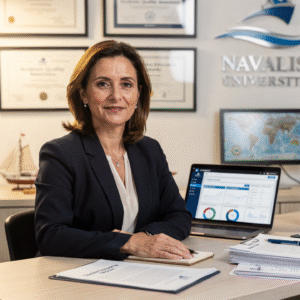 Dr. Marina AlcoverAcademic Director and Head of Quality Assurance
 Eng. Diego CifuentesSenior Lecturer in Naval Welding and Non-Destructive Testing; Head of QA/QC for Welded Joints
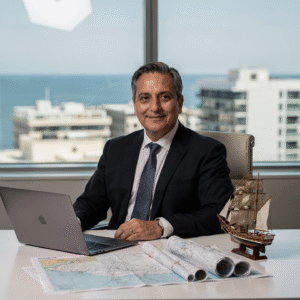 Capt. Javier Abaroa (MCA)Senior Lecturer in Ship Handling, Electronic Navigation (ECDIS/Radar/ARPA) and GMDSS; STCW Compliance and Bridge Resource Management Coordinator
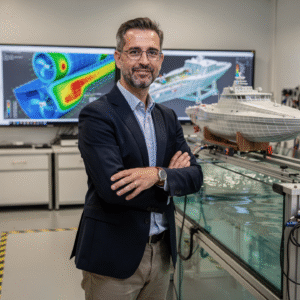 Dr. Pau FerrerSenior Lecturer in Naval Architecture and Simulation; Director of the Hydrodynamics and CFD Laboratory
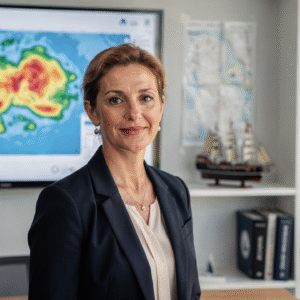 Dr. Nuria LlobregatSenior Lecturer in Marine Meteorology, SAR and Operational Safety; Navigation Risk Management Coordinator
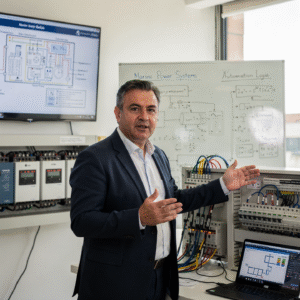 Eng. Javier BañulsSenior Lecturer in Electrical Engineering, Automation and ETO Engineering; Electronic Integration and Engine Alarms Coordinator
 Eng. Sofía MarquinaSenior Lecturer in Materials, Composites and Corrosion Protection; Coordinator of the Advanced Paints and Coatings Line
 Eng. Tomás RieraSenior Lecturer in Propulsion, Alternative Energy and Hybrid Systems; Energy Performance and Vibration Coordinator
Objectives of the Master's in Smart Ship Automation
Career opportunities after the Master's in Smart Ship Automation
Questions about the Master's in Smart Ship Automation
Highly automated and autonomous vessels of many types, including merchant ships, ferries, tugs, offshore support vessels and recreational craft, as well as offshore platforms.
Both. You study how to retrofit automation, connectivity and data systems on existing ships and how to define the architecture of new vessels with higher degrees of autonomy.
Autonomous navigation is one module among ten. The program also covers machinery and power automation, dynamic positioning, connectivity, OT cybersecurity, digital twins, remote operations and the legal framework, so you see the smart ship as one integrated system.
Basic knowledge of PLC programming and Python is recommended; the program builds on it to work with control logic, data and algorithms, and the admission interview helps confirm that your background fits.
Among others, the IMO MASS framework and the conventions it affects (SOLAS, MARPOL, STCW, COLREG), IMO Resolution MSC.428(98) and IEC 62443 for cybersecurity, IEC 60945 for marine electronics and classification society rules for integrated bridges and smart ships.
Through practical exercises and case studies in each module, an integrating project in which you design and validate the automation architecture of a smart ship with simulation, and a Final Project presented before a panel.
A master's degree issued by Navalis Institute as its own qualification, together with the architectures, models and reports you produce during the program, which you can use as a professional portfolio.
Online and designed for working professionals, with flexible study and content updated with the latest developments in automation and smart ships.
More programs in Machinery and electrics
Admission process
No waiting for a call back. If your documents are in order, you can enroll in the same session.
- Profile: aimed at naval and marine engineers, automation and control engineers, engineer officers and chief engineers, shipping company and shipyard staff, and researchers who want to specialize in smart ship automation; a degree in electronic, control, mechatronic or naval engineering, physics or a related field, or demonstrable professional experience in industrial or naval automation, is recommended, together with basic programming (PLC, Python), control systems, instrumentation and industrial networks.
- Language: sufficient command of English to follow the classes and the technical documentation.
- Technical resources: a computer able to run simulation software, with a stable internet connection, an up-to-date web browser and a PDF viewer.
- Admission: online application, review of your profile and a short interview with the academic team.
- 01ApplicationYour details, background and documents.
- 02Instant reviewWe check that everything is complete and in order.
- 03EnrollmentChoose full payment or instalments and reserve your place.
Admission is provisional until the committee validates the documents provided. If you do not meet the requirements, the full amount is refunded.
Ask us before you enroll
Leave your details and admissions will write to you to answer any questions. If you are already sure, you can apply and pay in the same session.