
Master's in Autonomous Marine Robotics
This master's prepares you to lead the new era of ocean exploration and management with autonomous marine robots. You will learn to design, build and program autonomous underwater vehicles (AUVs), unmanned surface vehicles (USVs) and gliders able to carry out complex tasks in demanding marine environments, mastering autonomous navigation, underwater computer vision, oceanographic data processing and acoustic communications with advanced simulation tools, digital twins and prototypes, for applications such as subsea infrastructure inspection, environmental monitoring, marine resource exploration and ocean research.
Prior knowledge check
These are the skills this program gives you. Tick the ones you already master and we will tell you which part of the syllabus is for you.
You are starting from scratch in this subject. The program is designed precisely for that.
What is the Master's in Autonomous Marine Robotics?
This master's follows an autonomous marine robot from concept to mission. You will begin with the fundamentals and typologies of unmanned marine vehicles (ROVs, AUVs, USVs and gliders) and their levels of autonomy; move on to mechanical design, hydrodynamics, propulsion, pressure housings, energy and payload integration; then study sensors and perception with multibeam, side-scan and imaging sonar, cameras, LiDAR and oceanographic sensors; inertial, DVL, acoustic and SLAM-based navigation; dynamic modeling, control, path planning and autonomous decision-making; acoustic, radio and satellite communications, swarms, computer vision, deep learning and ROS; mission planning, launch and recovery and fleet operations; the MASS framework, cybersecurity, insurance, classification and business models; and simulation, digital twins and validation of autonomy.
What sets this master's apart: its focus is autonomy itself, not a single vehicle type, so underwater, surface and gliding platforms are treated as one family of robots that perceive, decide and act without continuous human control; it gives equal weight to engineering, mission operations and the regulatory and business side of robotic services; and it closes with applications in ocean science, offshore wind, aquaculture, pollution detection, deep and polar waters and air-surface-underwater cooperation, before a Final Project in which you design a complete mission with an autonomous marine vehicle.
Program highlights
- Design of AUVs, USVs and gliders: hydrodynamics, propulsion, pressure housings, buoyancy, energy and payloads.
- Underwater perception: multibeam, side-scan and imaging sonar, cameras, LiDAR, oceanographic sensors and sensor fusion.
- Navigation and positioning with INS, DVL, USBL/LBL, terrain-aided navigation and underwater SLAM.
- Control, path planning, autonomous decision-making, COLREG obstacle avoidance and fail-safe modes.
- Acoustic and satellite communications, swarms, computer vision, reinforcement learning and ROS middleware.
- Simulation with Gazebo, software- and hardware-in-the-loop, digital twins and validation of autonomy.
Syllabus of the Master's in Autonomous Marine Robotics
11 modules. Select a module to see its content.
Fundamentals of marine robotics
- 1.1. Evolution of unmanned marine vehicles
- 1.2. Typologies: ROVs, AUVs, USVs and gliders
- 1.3. Scientific, industrial and defense applications
- 1.4. General architecture of a marine robot
- 1.5. Challenges of the marine environment
- 1.6. History of underwater robotics
- 1.7. Gliders and autonomous profilers
- 1.8. Industrial and research ecosystem
- 1.9. Levels of autonomy
- 1.10. Technology trends
Mechanical design and autonomous vehicles
- 2.1. Hydrodynamics and hull design
- 2.2. Propulsion and maneuverability
- 2.3. Materials and pressure-tight sealing
- 2.4. Energy and battery management
- 2.5. Payload integration
- 2.6. Design of unmanned surface vehicles
- 2.7. Ballast and buoyancy systems
- 2.8. Modular design and maintainability
- 2.9. Prototyping and manufacturing
- 2.10. Tank testing
Sensors and perception
- 3.1. Multibeam, side-scan and imaging sonar
- 3.2. Underwater cameras and LiDAR
- 3.3. Oceanographic sensors
- 3.4. Sensor fusion
- 3.5. Calibration and data processing
- 3.6. Magnetometers and object detection
- 3.7. Chemical and biological sensors
- 3.8. Time synchronization of sensors
- 3.9. Onboard processing
- 3.10. Data storage
Navigation and positioning
- 4.1. Inertial navigation and DVL
- 4.2. USBL and LBL acoustic positioning
- 4.3. Underwater SLAM
- 4.4. GNSS on surface vehicles
- 4.5. Managing navigation error
- 4.6. Cooperative navigation between vehicles
- 4.7. Terrain-aided navigation
- 4.8. Correction with reference points
- 4.9. Integration of navigation sensors
- 4.10. Accuracy testing
Control and autonomy
- 5.1. Dynamic models of marine vehicles
- 5.2. PID and advanced controllers
- 5.3. Path planning
- 5.4. Autonomous decision-making
- 5.5. Obstacle avoidance and COLREG for USVs
- 5.6. Robust control against currents
- 5.7. Control of vehicles with manipulators
- 5.8. Behavior-based architectures
- 5.9. Fault management and safe modes
- 5.10. Control simulation
Communications and artificial intelligence
- 6.1. Underwater acoustic communications
- 6.2. Radio and satellite links
- 6.3. Vehicle networks and swarms
- 6.4. Computer vision and deep learning
- 6.5. Onboard edge computing
- 6.6. Bandwidth management
- 6.7. Supervised teleoperation
- 6.8. Reinforcement learning
- 6.9. Object detection in sonar images
- 6.10. ROS middleware for marine robotics
Operations and missions
- 7.1. Mission planning
- 7.2. Launch and recovery
- 7.3. Inspection of offshore infrastructure
- 7.4. Underwater mapping and search
- 7.5. Maintenance and management of robotic fleets
- 7.6. Environmental monitoring
- 7.7. Military and security operations
- 7.8. Multi-vehicle operations
- 7.9. Post-mission analysis
- 7.10. Incident management during missions
Regulation, safety and market
- 8.1. Regulation of autonomous ships (MASS Code)
- 8.2. Safety and risk management
- 8.3. Cybersecurity of autonomous vehicles
- 8.4. Market and business models
- 8.5. Ethics of autonomy
- 8.6. Insurance for autonomous vehicles
- 8.7. Certification by classification societies
- 8.8. Navigation rules for USVs
- 8.9. Intellectual property
- 8.10. Business plan for a robotic service
Simulation, digital twins and validation of marine robotic systems
- 9.1. Marine robotics simulators: Gazebo and others
- 9.2. Hydrodynamic modeling for simulation
- 9.3. Simulation of acoustic and optical sensors
- 9.4. Software-in-the-loop and hardware-in-the-loop
- 9.5. Digital twins of autonomous vehicles
- 9.6. Test scenarios and edge cases
- 9.7. Validation and verification of autonomy
- 9.8. Mission performance metrics
- 9.9. Field trials and comparison with simulation
- 9.10. Validation project for a vehicle
Marine robotics for science, energy and sustainability
- 10.1. Ocean observation with gliders
- 10.2. Robots for biodiversity monitoring
- 10.3. Inspection of offshore wind farms
- 10.4. Robotics in aquaculture
- 10.5. Hull and net cleaning
- 10.6. Detection of pollution and plastics
- 10.7. Deep-water exploration
- 10.8. Polar robotics
- 10.9. Cooperation between aerial, surface and underwater robots
- 10.10. Sustainable application project
Final Project
- 11.1. Definition of the problem, objectives and scope of the project: design of a mission with an autonomous marine vehicle
- 11.2. Review of the state of the art and the applicable regulatory framework
- 11.3. Methodology, resources and work planning
- 11.4. Technical development and analysis of results
- 11.5. Conclusions, feasibility and future lines of work
- 11.6. Writing of the final report and defense before a panel
- 11.7. Choice of topic and definition of the research problem
- 11.8. Formulation of objectives, hypotheses and scope of the work
- 11.9. Analysis of the applicable regulatory and technical framework
- 11.10. Design of the methodology and the work plan
Duration and format of the Master's in Autonomous Marine Robotics
It is 1,500 hours. Tell us how many you can study each week and we will tell you when you will really finish.
This is the pace at which most students finish. It fits well with the installment plan.
Academic leadership and faculty
The Navalis teaching team: working professionals who teach and supervise the programs.
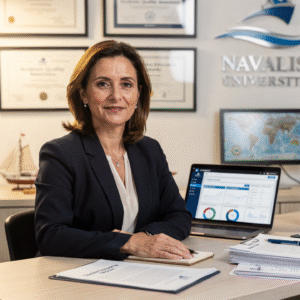 Dr. Marina AlcoverAcademic Director and Head of Quality Assurance
 Eng. Diego CifuentesSenior Lecturer in Naval Welding and Non-Destructive Testing; Head of QA/QC for Welded Joints
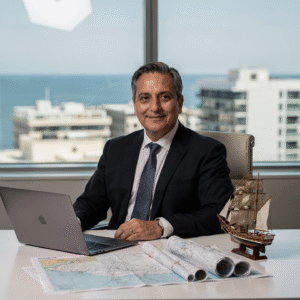 Capt. Javier Abaroa (MCA)Senior Lecturer in Ship Handling, Electronic Navigation (ECDIS/Radar/ARPA) and GMDSS; STCW Compliance and Bridge Resource Management Coordinator
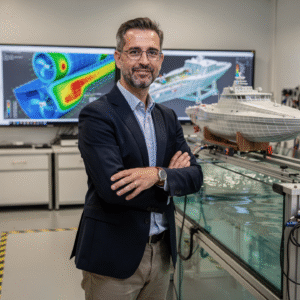 Dr. Pau FerrerSenior Lecturer in Naval Architecture and Simulation; Director of the Hydrodynamics and CFD Laboratory
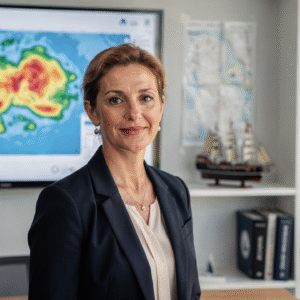 Dr. Nuria LlobregatSenior Lecturer in Marine Meteorology, SAR and Operational Safety; Navigation Risk Management Coordinator
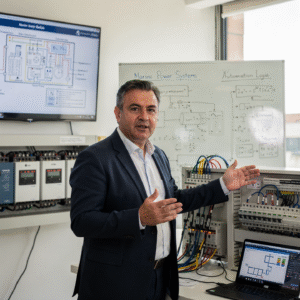 Eng. Javier BañulsSenior Lecturer in Electrical Engineering, Automation and ETO Engineering; Electronic Integration and Engine Alarms Coordinator
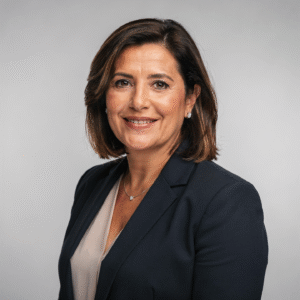 Eng. Sofía MarquinaSenior Lecturer in Materials, Composites and Corrosion Protection; Coordinator of the Advanced Paints and Coatings Line
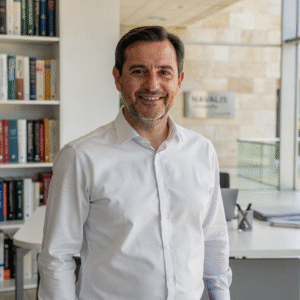 Eng. Tomás RieraSenior Lecturer in Propulsion, Alternative Energy and Hybrid Systems; Energy Performance and Vibration Coordinator
Objectives of the Master's in Autonomous Marine Robotics
Career opportunities after the Master's in Autonomous Marine Robotics
Questions about the Master's in Autonomous Marine Robotics
Marine and underwater environments: open ocean, coastal waters, offshore facilities, deep and polar waters, using underwater, surface and gliding autonomous vehicles.
Mainly the maritime and offshore sector, including oil and gas, offshore renewables, aquaculture, defense and security, and oceanographic research.
The focus is autonomy across all marine platforms: how a robot perceives, navigates, decides and handles faults on its own, plus mission operations, the MASS framework and the business of robotic services, rather than the engineering of a single vehicle type.
Yes. A full module covers marine robotics simulators such as Gazebo, hydrodynamic and sensor simulation, software- and hardware-in-the-loop, digital twins and the validation of autonomy against field data.
It is recommended. The program works with control algorithms, computer vision, machine learning and ROS, so a basic command of programming and engineering mathematics will help you get the most out of it.
Online, with live sessions and recorded classes, access to simulation tools and specialized software, and personalized tutoring, designed for working professionals.
Through practical work in each module, such as vehicle design exercises, navigation and control simulations, mission plans and data analysis, together with the Final Project.
A Final Project in which you design a full mission with an autonomous marine vehicle, covering the problem, state of the art, regulatory framework, methodology, technical development and results, presented and defended before a panel.
More programs in Underwater robotics
Admission process
No waiting for a call back. If your documents are in order, you can enroll in the same session.
- Profile: aimed at engineers and scientists who want to specialize in autonomous marine vehicles, offshore professionals working with subsea robotic systems for inspection, repair and maintenance, researchers in marine robotics, graduate students in engineering, robotics or oceanography, and entrepreneurs developing robotics-based solutions; a degree in electronic, mechatronic, computer or naval engineering, physics or mathematics is recommended, and experience in robotics, autonomous systems or marine engineering is valued.
- Language: sufficient command of English to follow the classes and the technical documentation.
- Technical resources: a computer with enough processing power for simulation and software development, a high-speed internet connection and programming and simulation software compatible with the tools used in the program.
- Admission: online application, review of your profile and a short interview with the academic team.
- 01ApplicationYour details, background and documents.
- 02Instant reviewWe check that everything is complete and in order.
- 03EnrollmentChoose full payment or instalments and reserve your place.
Admission is provisional until the committee validates the documents provided. If you do not meet the requirements, the full amount is refunded.
Ask us before you enroll
Leave your details and admissions will write to you to answer any questions. If you are already sure, you can apply and pay in the same session.