
Master's in Autonomous Drone Fleets for Naval Surveillance
This master's prepares you to design, integrate and run automated drone systems for maritime surveillance and inspection. You will learn how autonomous platforms, drone networks and fleets work together with radar, AIS and command and control systems; how to fuse data from LiDAR, radar and electro-optical sensors with artificial intelligence; how to keep drones navigating and communicating securely in harsh, GNSS-denied and contested environments; and how to operate them safely within the regulations that apply in ports and at sea.
Prior knowledge check
These are the skills this program gives you. Tick the ones you already master and we will tell you which part of the syllabus is for you.
You are starting from scratch in this subject. The program is designed precisely for that.
What is the Master's in Autonomous Drone Fleets for Naval Surveillance?
This master's covers automation and drones for naval surveillance as one integrated system. You will study the architecture of autonomous systems, middleware and time synchronization; drone networks at sea, mesh and ad hoc topologies and fleet management frameworks; command and control with AI-based multi-sensor fusion and automatic target classification; navigation without GNSS using INS, SLAM and stereo vision; communications and telemetry, modulation, multiband antennas, spectrum management and failover; secure communication architectures, cryptography and international standards; cybersecurity for naval drones, from spoofing and jamming to intrusion detection; autonomous fleet optimization, swarm intelligence and energy management; interoperability between uncrewed and crewed platforms; and UAS regulation, SORA risk assessment and drone operations manuals.
What sets this master's apart: it focuses on aerial and surface drone fleets as a networked surveillance capability rather than on single-vehicle inspection; it treats communications, cybersecurity and resilience against interference as core engineering subjects alongside autonomy and AI; it connects drone systems with radar, AIS, ECDIS, SCADA and command and control platforms; and it closes with a Final Project in which you develop a complete autonomous naval surveillance system with secure networks, AI-based sensor fusion, an operator interface and a validation plan.
Program highlights
- Integration of autonomous systems and drone networks with radar, AIS, ECDIS, SCADA and command and control platforms.
- AI-based multi-sensor fusion: LiDAR, radar, electro-optical, infrared, hyperspectral and acoustic sensors.
- GNSS-denied navigation with INS, SLAM, stereo vision and collaborative sensor networks.
- Secure communications and telemetry: mesh networks, encryption, spectrum management and automatic failover.
- Cybersecurity for naval drones: spoofing, jamming, denial of service, IDS/IPS and penetration testing.
- Fleet and swarm management, energy optimization, UAS regulation and SORA risk assessment.
Syllabus of the Master's in Autonomous Drone Fleets for Naval Surveillance
11 modules. Select a module to see its content.
Advanced integration of autonomous systems and drones for intelligent naval surveillance
- 1.1. Architecture for integrating autonomous systems: communication protocols, middleware and time synchronization
- 1.2. Drone networks at sea: topologies, interoperability, optimization and redundancy for continuous operations
- 1.3. Multispectral sensors and maritime LiDAR: calibration, data fusion and real-time processing
- 1.4. Autonomous navigation algorithms: SLAM, adaptive route planning and obstacle avoidance in ocean conditions
- 1.5. Distributed control systems for drone fleets: architecture, scalability and fault tolerance
- 1.6. Intelligent naval surveillance protocols: international standards, secure transmission and validation of critical data
- 1.7. Artificial intelligence and machine learning for predictive maintenance and anomaly detection
- 1.8. Integration with conventional naval systems: radar, AIS, SCADA and command and control platforms
- 1.9. Automated drone launch and recovery: techniques, logistics and energy management in hostile environments
- 1.10. Cybersecurity in autonomous marine systems: attack protection, end-to-end encryption and access management
Architecture and design of autonomous networks for drones in intelligent naval operations
- 2.1. Foundations of autonomous networks: topologies, protocols and distributed architectures for naval environments
- 2.2. Communication system design for drones: data links, advanced modulation, frequency and spectrum at sea
- 2.3. Mesh and ad hoc networks for dynamic, mobile naval surveillance operations
- 2.4. Networked sensors and navigation: differential GNSS, INS, LiDAR, short-range radar and optical communications
- 2.5. Drone fleet management platforms: task allocation, flight orchestration and real-time data synchronization
- 2.6. Security in autonomous networks: encryption, mutual authentication and resistance to interference and cyberattacks
- 2.7. Bandwidth and critical latency optimization for video, telemetry and commands
- 2.8. Scalable, resilient architectures for continuous operation in adverse maritime and electromagnetic conditions
- 2.9. Advanced telemetry and real-time analytics for autonomous decisions with embedded AI
- 2.10. Case studies: networks for surveillance, rescue, naval infrastructure inspection and environmental monitoring
Autonomous system integration and drone network design for intelligent naval surveillance
- 3.1. Foundations of autonomous systems in naval environments: autonomy, integrated sensors and adaptive decision-making
- 3.2. Design and architecture of naval drone platforms: multispectral sensors, secure communications and redundant systems
- 3.3. Communication protocols and autonomous networks: mesh networks and low-latency coordination with naval control centers
- 3.4. Artificial intelligence for autonomous surveillance: anomaly detection, deep learning and predictive alerts
- 3.5. Distributed architectures for coordinated missions: task synchronization, UAV fleet management and blockchain for data traceability
- 3.6. Route optimization and autonomous navigation: digital nautical charts, differential GNSS and SLAM
- 3.7. Cybersecurity in naval drone networks: encryption, intrusion detection and resilient protocols against interference
- 3.8. Integration with naval information systems: ECDIS, AIS and ground control stations
- 3.9. Simulation models and virtual training for planning and rehearsing drone operations
- 3.10. Developing and managing naval automation projects: planning, technical and regulatory risk and agile methods
Advanced command and control: AI for sensor fusion, GNSS-denied navigation and cybersecurity in naval surveillance drones
- 4.1. Evolution of command and control in naval operations: from centralized to distributed architectures for uncrewed platforms
- 4.2. AI for real-time multi-sensor fusion of radar, LiDAR, electro-optical and infrared data
- 4.3. Machine learning for automatic recognition and classification of maritime and aerial targets
- 4.4. Robust GNSS-denied navigation: INS, SLAM, stereo vision and collaborative sensor networks
- 4.5. Resilient cybersecurity architectures for naval drones: protection against spoofing, jamming and data integrity breaches
- 4.6. Secure communications and end-to-end encryption between platform and control center
- 4.7. AI-based mission management systems (MMS) for autonomous and supervised fleet control
- 4.8. Simulation and validation of complex scenarios with digital twins
- 4.9. Distributed sensor networks to extend the range and accuracy of collaborative fusion
- 4.10. Self-learning and self-calibration of sensors and platforms for predictive maintenance
Advanced communication and telemetry systems for drones in complex naval environments
- 5.1. Communication architectures for naval drones: ad hoc networks, mesh protocols and MIMO at sea
- 5.2. Advanced telemetry: real-time bidirectional data, compression, coding and multiplexing
- 5.3. Modulation and multiple access: OFDM, DSSS and CDMA against interference and multipath propagation
- 5.4. Secure communication networks: AES-256 and TLS/DTLS for data integrity and confidentiality
- 5.5. GNSS integrated with RTK, PPP and inertial sensors for precise positioning in coastal and open waters
- 5.6. Data link protocols for naval drones: extended MAVLink for high latency and fast mobility
- 5.7. Multiband antennas: types, radiation patterns and configurations for moving naval platforms
- 5.8. Dynamic spectrum management: adaptive frequency hopping and real-time interference detection
- 5.9. Telemetry in adverse conditions: atmospheric effects, saline environments and physical obstacles
- 5.10. Redundant communication systems and automatic failover for critical surveillance missions
Secure communication architectures and sensor fusion technologies in autonomous drones for advanced naval surveillance
- 6.1. Communication architectures in autonomous systems: topologies, protocols and OSI layers for naval drones
- 6.2. Secure data transmission at sea: TLS/DTLS, IPsec and low-latency encrypted communications
- 6.3. Ad hoc vehicular networks (VANET) and mesh networks for drone swarms in complex maritime areas
- 6.4. Applied cryptography: symmetric and asymmetric algorithms, key management and robust authentication
- 6.5. International standards on maritime communications security and uncrewed systems: IMO, ETSI and IEEE
- 6.6. Integration and synchronization of LiDAR, maritime radar, multispectral cameras, acoustic sensors and GNSS
- 6.7. Sensor data fusion: extended Kalman filters, convolutional neural networks and real-time decision algorithms
- 6.8. Distributed onboard processing: edge computing and embedded systems to reduce latency
- 6.9. Resilience and redundancy in sensor and communication architectures against interference
- 6.10. AI-based rapid response and dynamic rerouting for threat avoidance and patrol optimization
Autonomous integration systems, secure networks and cybersecurity in drones for intelligent naval operations
- 7.1. Foundations of autonomous integration in naval UAV platforms: modular architecture and interface standards
- 7.2. Multi-agent systems for collaborative operations in complex maritime environments
- 7.3. Secure networks for uncrewed aerial platforms: advanced cryptographic protocols and end-to-end encryption
- 7.4. Redundant communication protocols and fault tolerance on high-latency maritime data links
- 7.5. Distributed architectures for autonomous control and real-time supervision of drone swarms
- 7.6. Assessing and mitigating cyber vulnerabilities in naval surveillance drones: risk analysis and penetration testing
- 7.7. Countermeasures against interference and denial-of-service attacks on drone networks and base stations
- 7.8. Intrusion detection and prevention systems (IDS/IPS) for maritime and maritime-air environments
- 7.9. Frameworks for secure data management and information integrity during autonomous missions
- 7.10. AI and machine learning for predictive detection of cyber threats on naval UAV platforms
Autonomous optimization and management of drone fleets for strategic surveillance in dynamic naval environments
- 8.1. Foundations of algorithmic optimization in distributed drone systems at sea
- 8.2. Autonomous architectures for drone fleets: decentralized and hierarchical control models
- 8.3. High-precision inertial navigation and GNSS: error mitigation in dynamic naval environments
- 8.4. Multiscale sensors for naval surveillance: electro-optical cameras, LiDAR, short-range radar and acoustic systems
- 8.5. Secure, redundant communications between drones and ground stations: latency, interference and cybersecurity
- 8.6. AI algorithms for real-time route and task planning in changing sea conditions
- 8.7. Swarm intelligence for coordinating heterogeneous drones in strategic maritime surveillance
- 8.8. Intelligent energy management: consumption optimization and extended endurance over open water
- 8.9. Predictive simulation of complex naval scenarios for automatic, adaptive fleet response
- 8.10. Automatic recovery and contingency protocols: fault detection, basic self-repair and safe landing on naval platforms
Innovation in autonomous systems and secure communication networks for integrated naval surveillance drones
- 9.1. Advanced foundations of autonomous systems: modular architecture, control algorithms and distributed decision logic
- 9.2. Multimodal sensors for naval drones: LiDAR, maritime radar, hyperspectral cameras and electro-optical detection
- 9.3. Secure network design: cryptographic protocols, mutual authentication and resistance to jamming
- 9.4. Real-time data transmission: low latency, automatic redundancy and quality of service in high-mobility networks
- 9.5. AI and machine learning for anomaly detection, pattern recognition and threat prediction
- 9.6. Cybersecurity architectures for autonomous naval systems: intrusion protection, sandboxing and integrity monitoring
- 9.7. Interoperability between uncrewed and crewed platforms: protocol standardization and collaborative autonomy levels
- 9.8. Dynamic mesh networks over wide maritime areas: self-configuration, load balancing and failure recovery
- 9.9. Robust positioning and navigation: GNSS augmented with inertial sensors and sensor fusion
- 9.10. Modeling and simulation of drone surveillance scenarios under adverse conditions and electronic interference
Regulation, certification and safe operation of drones in the maritime domain
- 10.1. European UAS regulation and categories of operation
- 10.2. Rules for maritime and surface drones
- 10.3. Flight authorizations in port areas
- 10.4. Airspace and coordination with the authorities
- 10.5. SORA operational risk assessment
- 10.6. Training and licensing of remote pilots
- 10.7. Protection of data and images
- 10.8. Insurance and civil liability
- 10.9. Maintenance and airworthiness
- 10.10. Operations manual for a drone operator
Final Project
- 11.1. Design and architecture of the integrated system: modular integration of autonomous platforms and high-security naval networks
- 11.2. Multimodal sensor fusion: real-time combination of LiDAR, radar, hyperspectral, acoustic and magnetic data
- 11.3. Development and calibration of AI models for predictive analysis and autonomous detection of threats and anomalies
- 11.4. Secure communication networks: cryptographic protocols and resistance to interference and cyberattacks
- 11.5. Automated real-time control and supervision of drone fleets for surveillance, reconnaissance and rapid response
- 11.6. Uncrewed aerial platforms: propulsion, stability and navigation over territorial waters and exclusion zones
- 11.7. Advanced simulation and digital training environments for testing and commissioning the system
- 11.8. Human-machine interface (HMI) for platform management, data analysis and automated alerts
- 11.9. Validation, performance evaluation and compliance with international and maritime standards
- 11.10. Complete project based on real naval needs, with presentation and defense of the system before a panel
Duration and format of the Master's in Autonomous Drone Fleets for Naval Surveillance
It is 1,500 hours. Tell us how many you can study each week and we will tell you when you will really finish.
This is the pace at which most students finish. It fits well with the installment plan.
Academic leadership and faculty
The Navalis teaching team: working professionals who teach and supervise the programs.
 Dr. Marina AlcoverAcademic Director and Head of Quality Assurance
 Eng. Diego CifuentesSenior Lecturer in Naval Welding and Non-Destructive Testing; Head of QA/QC for Welded Joints
 Capt. Javier Abaroa (MCA)Senior Lecturer in Ship Handling, Electronic Navigation (ECDIS/Radar/ARPA) and GMDSS; STCW Compliance and Bridge Resource Management Coordinator
 Dr. Pau FerrerSenior Lecturer in Naval Architecture and Simulation; Director of the Hydrodynamics and CFD Laboratory
 Dr. Nuria LlobregatSenior Lecturer in Marine Meteorology, SAR and Operational Safety; Navigation Risk Management Coordinator
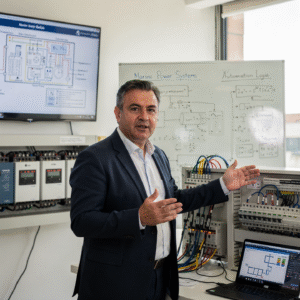 Eng. Javier BañulsSenior Lecturer in Electrical Engineering, Automation and ETO Engineering; Electronic Integration and Engine Alarms Coordinator
 Eng. Sofía MarquinaSenior Lecturer in Materials, Composites and Corrosion Protection; Coordinator of the Advanced Paints and Coatings Line
 Eng. Tomás RieraSenior Lecturer in Propulsion, Alternative Energy and Hybrid Systems; Energy Performance and Vibration Coordinator
Objectives of the Master's in Autonomous Drone Fleets for Naval Surveillance
Career opportunities after the Master's in Autonomous Drone Fleets for Naval Surveillance
Questions about the Master's in Autonomous Drone Fleets for Naval Surveillance
It focuses mainly on aerial and surface drone fleets used for maritime surveillance and inspection, together with the automation, networks and command and control systems that support them.
Instead of ROV and AUV inspection, it concentrates on networked fleets and swarms for surveillance: secure communications, cybersecurity, sensor fusion, GNSS-denied navigation and fleet optimization.
Yes. It studies European UAS regulation and categories of operation, rules for maritime and surface drones, port flight authorizations, airspace coordination, SORA risk assessment, data protection, insurance and operations manuals. Any remote pilot license is issued by the competent aviation authority.
A great deal: several modules cover encryption and key management, protection against spoofing, jamming and denial-of-service attacks, intrusion detection and prevention, penetration testing and AI-based threat detection.
Basic knowledge of programming (Python, ROS), electronics and control systems is recommended; the admission interview confirms that the program suits your profile.
Through technical exercises and case studies in each module and a Final Project in which you develop a complete autonomous naval surveillance system and defend it before a panel.
A master's issued by Navalis Institute, together with the architectures, risk analyses and system designs you develop during the program.
Fully online, through a virtual campus available 24/7 with live sessions that are recorded, forums and tutorials. It comprises 1500 hours of study across 11 modules of about 136 hours each.
More programs in Underwater robotics
Admission process
No waiting for a call back. If your documents are in order, you can enroll in the same session.
- Profile: aimed at naval and electronic engineers, merchant navy and naval officers, professionals in the offshore and marine renewable energy industries, fleet technicians and managers, and engineering and science graduates. A degree in electronic, mechatronic, robotic or aerospace engineering, nautical studies or a related field, or proven experience in automation, robotics or naval surveillance, is recommended, together with basic knowledge of programming (Python, ROS), electronics, control systems and sensors.
- Language: sufficient command of English to follow the classes and the technical documentation.
- Technical resources: a computer able to run simulations and software development tools, a broadband internet connection and videoconferencing software.
- Admission: online application, review of your profile and a short interview with the academic team.
- 01ApplicationYour details, background and documents.
- 02Instant reviewWe check that everything is complete and in order.
- 03EnrollmentChoose full payment or instalments and reserve your place.
Admission is provisional until the committee validates the documents provided. If you do not meet the requirements, the full amount is refunded.
Ask us before you enroll
Leave your details and admissions will write to you to answer any questions. If you are already sure, you can apply and pay in the same session.